
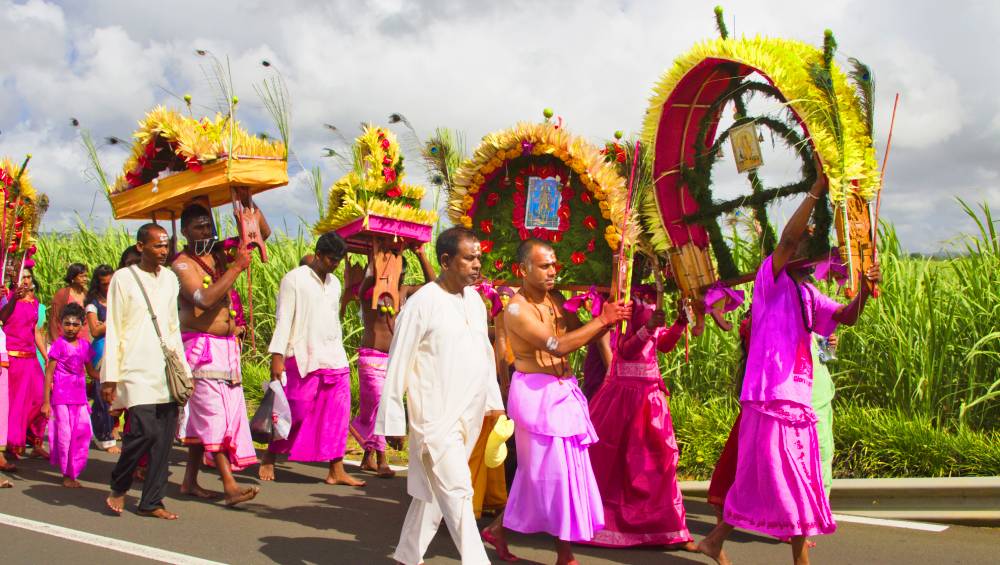
Thaipoosam Cavadee est un festival célébré par les hindous du monde entier et à Maurice en l'honneur de dieu Kartikeya, également connu sous le nom de Muruga et Subramaniam. Cette occasion est marquée par une dévotion fervente, des rituels élaborés et un sentiment de communauté qui transcende les frontières culturelles et est généralement célébré au mois de Thai (calendrier tamoul) entre janvier et février. Explorons la signification, les coutumes et l'essence spirituelle du festival Thaipoosam Cavadee.
Cette cérémonie religieuse est originaire du sud de l'Inde et est célébrée à Maurice ainsi qu'au Sri Lanka, en Afrique du Sud, à Malaisie et à Singapour, et les fidèles observent cette fête avec un immense enthousiasme. Ils expriment leur dévotion et recherchent les bénédictions du dieu Kartikeya, le dieu de la guerre et de la victoire. Le festival revêt une grande importance car il commémore le moment divin où le dieu Kartikeya a reçu la lance divin, ou le "vel ", de sa mère, la déesse Parvati, pour vaincre le démon "Tarakasura".
Thaipoosam Cavadee, une essence spirituelle qui dépasse une simple célébration religieuse , c'est un voyage spirituel qui signifie le triomphe du bien sur le mal et la conquête des démons intérieurs. L'endurance physique et mentale manifestée par les fidèles pendant les rituels reflète leur foi et leur engagement envers le divin. Le festival favorise également un sentiment d'unité et de camaraderie au sein de la communauté. Des personnes de toutes communautés se réunissent pour célébrer le fil conducteur de la spiritualité, transcendant la culture.
Thaipoosam Cavadee n'est pas seulement un festival, c'est une expérience spirituelle profonde qui relie les fidèles au divin et entre eux. Les rituels et les célébrations rappellent la bataille éternelle entre le bien et le mal, exhortant les individus à lutter pour la droiture et la croissance spirituelle. Comme les battements de la musique traditionnelle et le parfum de l'encens remplissent l'air, Thaipoosam Cavadee devient un témoignage du pouvoir durable de la foi et de la dévotion face aux difficultés de la vie. Si vous prévoyez des vacances à l'île Maurice en janvier ou février, ne manquez pas cette célébration hindoue qui implique le perçage corporel.
Traditional music and the scent of incense fill the air, Thaipoosam Cavadee becomes a testament to the enduring power of faith and devotion in the face of life’s
challenges. If you are planning a holiday to Mauritius during January or February don’t miss out on this Hindu celebration which involves body piercing.
Coutumes et rituels :
1. Jeûne et pénitence : Les fidèles se livrent souvent au jeûne et à la pénitence dans les semaines précédant Thaipoosam Cavadee. On pense que cela purifie le corps et l’esprit, ce qui en fait des récipients dignes de recevoir les bénédictions divines.
2. Kavadi Attam : Le point culminant du festival "Kavadi Attam", un rituel spectaculaire et élaboré. Les fidèles portent un "Cavadee", une structure ornée de fleurs et de plumes de paon, en guise d'acte de pénitence et de dévotion. Certains se percent même le corps avec des crochets, symbolisant leur sacrifice et leur dévouement au dieu Kartikeya.
3. Offrandes et prières : les fidèles visitent les temples, portant des offrandes comme des fruits, des fleurs et de l'encens pour exprimer leur gratitude et rechercher des bénédictions divines. Des prières spéciales et des hymnes dédiés au Seigneur Kartikeya sont chantés lors de ces cérémonies.
4. Processions et célébrations : Des processions colorées sont organisées, avec des fidèles défilant au rythme de la musique et des chants traditionnels. L'atmosphère est remplie de l'énergie joyeuse des participants exprimant leur profond dévouement.



 FR
FR  EN
EN